SHO NUT Performance Cams Page
Revised 12/16/19
We have worked with Colt Cams to come up with FOUR SHO
NUT Performance exclusive cam profiles. Colt
Cams is a company that specializes in high-quality cam grinding for a variety
of vehicle applications, including the SHO.
Our offerings are composed of four cam sets:
SHO NUT Performance Tri-Flow cams
SHO NUT Performance Plus 40 cams (Special order
only)
SHO NUT Performance Plus 20 cams (Special order
only)
SHO NUT Performance Plus 10 cams
The numbered name implies the additional lift
over a stock MTX cam for the first two numbered cams (Plus 40/20), and a
natural progression of numbers for the third numbered cam (Plus 10) (See below)
As a primer, here are the measured specs of the
stock cams:
MTX Intake 0.348”
Lift, 205° Duration @ 0.050”
MTX Exhaust 0.328”
Lift, 201° Duration @ 0.050”
ATX Intake 0.328”
Lift, 201° Duration @ 0.050”
ATX Exhaust 0.328”
Lift, 201° Duration @ 0.050”
The ATX Intake chain flange bolt holes are also
advanced 4 crankshaft degrees relative to the MTX cam. As the Intake chain flange is what drives the
Exhaust cam, this effectively advances the Exhaust cam in an engine with ATX
cams by 4 crankshaft degrees, which also reduces the overlap by 4 crankshaft
degrees. Compounded with less duration
on the ATX intake lobe, there is substantially less overlap with the stock ATX
cams. In total, there is 6 crankshaft
degrees less overlap, 4° due to the advanced exhaust cam, and 2° due to 4° less
intake duration (1/2 of the total duration difference). Note that if you are regrinding cams, it is
critical that both intake cams be either MTX or ATX, or you will have
mis-matched exhaust lobe centerlines between banks due to the 4° difference
between MTX and ATX exhaust cam timing, as driven by the intake cam
flanges. We carefully check each set of
camshafts to verify that we have matching intake cams for each set of cams
made.
To make our Plus 40 cams, we take MTX cores,
add a 0.055” lash cap, and grind a new profile ‘straight up’ (i.e. same
centerline as stock) which includes grinding the base circle approximately
0.055” and broadening the tip to increase the lift and increase the duration. In addition, quieting ramps are incorporated
into our lobe profile to keep the valve train quiet and lessen the shock on the
valve springs that you would otherwise get with extreme ramp rates. Quieting ramps are a new feature for SHO
performance cams. Since the tip is
broadened, it is impossible to get all 0.055” as additional lift, since the
stock lobe is quite pointy, and we need to account for wear etc. It is also not practical to grind more off
the base circle – we are nearly into the shaft of the cam as it is, and clearancing of the cam journals is required to get this far
(so the shims won’t hit the cam journals, since they are now 0.055” closer to
the shaft of the cam, and would otherwise hit the cam journals if the journals
were not clearanced properly, keeping the valves open
– a bad thing).
To make our Tri-Flow cams, we take MTX cores,
add a 0.055” lash cap, and grind a new profile which includes grinding the base
circle approximately 0.055” and broadening the tip to increase the lift and
increase the duration. For the
‘secondary’ lobe, which is mated the short fat runner that is only open over
~4000 RPM, we grind the same high lift/high duration ‘straight up’ lobe as our
Plus 40 cam. For the ‘primary’ lobe,
which is mated to the long skinny runner that is open all the time, we grind a
lobe that is lower in lift and duration than the secondary lobe, and is
retarded relative to the ‘straight up’ secondary lobe, to decrease overlap when
only the primary runner is being used before ~4000 RPM. The amount of primary lobe retardation is
such that the intake valves close at the same time. The idea is that when the secondaries are
closed below ~4000 RPM, you have less overlap, intake lift and duration than
when the secondaries are open above ~4000 RPM, and the runner to the larger
lobe is no longer blocked. This mimics the effect of variable valve timing and lift
without the usual hardware involved.
Increased lift, duration and overlap is generally detrimental to low RPM
operation, and advantageous to high RPM operation. Granted, there is an incomplete separation
between primary and secondary intake ports in the head, so some cross-over may
occur in the head, but the idea is that the direct air path is controlled by
the secondary throttle plates to keep the effect of the large lobe in RPM
ranges above ~4000 RPM when both runners are in use. Thus a Tri-Flow cam should have a smoother
idle and more low end power than a Plus 40, while losing little to the Plus 40
in the top end, when the long skinny runner is essentially a cork, and not
flowing much air flow relative to the short fat runner, and thus the lower
lift/duration lobe in the lower-flowing skinny runner is not much of a
penalty. Colt Cams discusses the
Tri-Flow technology in general here but
the setup for the SHO is somewhat unique, as a different runner is used for the
‘primary’ and ‘secondary’ lobes, instead of the usual use of identical runners
in other engines for both lobes. Their
use of ‘primary’ (large lobe) and ‘secondary’ (small lobe) is also reversed
relative to the normal SHO usage of the ‘primary’ as the low RPM runner which
uses the smaller lobe in our application, and the ‘secondary’ as the as the
high RPM runner which uses the larger lobe in our application. Thus the swirl
effect may not be the same in the SHO application.
To make our Plus 20 cams, we take ATX cores,
and as with the MTX cores, we add a 0.055” lash cap, and grind a new profile ‘straight
up’ (i.e. same centerline as stock) which includes grinding the base circle
approximately 0.055” and broadening the tip to increase the lift and increase
the duration. Since the ATX intake cores
have less lift to work with compared to MTX intake cores, even though we are
grinding 0.055” off the base circle, we can only get about 0.020” more lift
than a stock MTX intake cam, hence the ‘Plus 20’ name. Compared to a stock ATX intake cam, the
increase is just as dramatic as it is for an MTX intake cam, (going from a
stock ATX cam to a Plus 20 is approximately a 0.040”
increase in lift), but for our purposes, we will compare all cams to stock MTX
cams when quoting increases in lift etc.
Since the same exhaust cam is used for both MTX
and ATX engines, the core is the same, and thus our exhaust cam spec is the
same for Plus 40, Plus 20, and Tri-Flow Cams, i.e. approximately a 0.040”
increase in lift. In other words, the
‘Plus 40’ exhaust cam is used for the Plus 40, Plus 20 and Tri-Flow cams. Thus the Plus 20 is
really a Plus 20 intake / Plus 40 exhaust mix.
To make our Plus 10 cams, we take MTX cores,
add a 0.035” lash cap, and grind a new profile ‘straight up’ (i.e. same
centerline as stock) which includes grinding the base circle approximately
0.035” and broadening the tip to increase the lift and increase the
duration. As with the first two grinds,
quieting ramps are incorporated into our lobe profile to keep the valve train
quiet and lessen the shock on the valve springs that you would otherwise get
with high ramp rates. Since the tip is broadened, it is impossible to get all
0.035” as additional lift, since the stock lobe is quite pointy, and we need to
account for wear etc. Clearancing of the cam journals is not required with the
Plus 10 cam.
Here are the specs of the four cam offerings –
these are actual numbers and not some inflated ‘advertised’ number:
|
SHO NUT Performance Tri-Flow Cams |
|||||||
|
Specifications |
Compare to Stock MTX: |
Increase from Stock: |
|||||
|
|
Lift |
Duration @ 0.050 |
Lift |
Duration @ 0.050 |
Lift |
Duration @ 0.050 |
Overlap* |
|
Secondary Int. |
0.390 |
228° |
0.348 |
205° |
0.042 |
23° |
24.5° (S) 9.5° (P) |
|
Primary Int. |
0.375 |
218° |
0.348 |
205° |
0.027 |
13° |
|
|
Exhaust |
0.365 |
227° |
0.328 |
201° |
0.037 |
26° |
|
|
* Can be
increased or decreased 6 or 12 degrees with our adjustable camshaft sprockets |
|||||||
|
All
degree measurements are in crankshaft degrees. Divide by 2 for camshaft degrees. |
|||||||
|
SHO NUT Performance Plus 40 Cams |
|||||||
|
Specifications |
Compare to Stock MTX: |
Increase from Stock: |
|||||
|
|
Lift |
Duration @ 0.050 |
Lift |
Duration @ 0.050 |
Lift |
Duration @ 0.050 |
Overlap* |
|
Intake |
0.390 |
228° |
0.348 |
205° |
0.042 |
23° |
24.5° |
|
Exhaust |
0.365 |
227° |
0.328 |
201° |
0.037 |
26° |
|
|
SHO NUT Performance Plus 20 Cams |
|||||||
|
Specifications |
Compare to Stock MTX: |
Increase from Stock: |
|||||
|
|
Lift |
Duration @ 0.050 |
Lift |
Duration @ 0.050 |
Lift |
Duration @ 0.050 |
Overlap* |
|
Intake |
0.365 |
227° |
0.348 |
205° |
0.017 |
22° |
20° |
|
Exhaust |
0.365 |
227° |
0.328 |
201° |
0.037 |
26° |
|
|
SHO NUT Performance Plus 10 Cams |
|||||||
|
Specifications |
Compare to Stock MTX: |
Increase from Stock: |
|||||
|
|
Lift |
Duration @ 0.050 |
Lift |
Duration @ 0.050 |
Lift |
Duration @ 0.050 |
Overlap* |
|
Intake |
0.370 |
214° |
0.348 |
205° |
0.022 |
9° |
11° |
|
Exhaust |
0.345 |
214° |
0.328 |
201° |
0.017 |
13° |
|
The Tri-Flow cam is targeted at someone who
wants to reduce the negative effects of a ‘big cam’ at low RPM, while retaining
the ‘big cam’ effect at high RPM. Of course, both cam timing and overlap can be
independently adjusted with our SHO NUT Performance Adjustable Cam Sprockets.
The Plus 40 cam is targeted at someone who
wants maximum top end power in a motor with ported heads and dramatically
increased displacement, i.e. stroker or big-bore motor that is used for high
RPM road racing. The Plus 40 cam may not
produce any more power than the Plus 20 when put in a 3.0L or 3.2L with stock heads, but may have a rougher idle due to the increased
overlap. Due to the increased overlap, it is not recommended for forced
induction – use the Plus 20 for forced induction, as it has the same exhaust
cam, but less overlap. Of course, both
cam timing and overlap can be independently adjusted with our SHO NUT
Performance Adjustable Cam Sprockets.
The Plus 20 cam is targeted at modified cars
with stock heads and a 3.0L or 3.2L, including forced induction that
needs minimum overlap and maximum exhaust lift and duration. Note that the 4° exhaust cam advance/overlap
reduction (compared to an MTX cam set) in the ATX core is carried through to
the Plus 20 cam, and thus the Plus 20 cam set will have 4.5° less overlap than
the Plus 40 cam, while retaining the Plus 40 exhaust profile. As before, both cam timing and overlap can be
independently adjusted with our SHO NUT Performance Adjustable Cam Sprockets.
The Plus 10 cam is targeted at a stock or
near-stock motor, and should have more low end torque than the other two
numbered cams, by virtue of reduced lift and duration and overlap, and thus
boosting power all the way through the power band, compared to stock. As before, both cam timing and overlap can be
independently adjusted with our SHO NUT Performance Adjustable Cam Sprockets.
Pricing, including
lash caps and a shim rental and excluding core charges/refunds is listed on our
Performance page. Shipping/handling is
extra and is $45. This is waived if you
pick up the cams at Colt Cams.
The shim selection
for the rental is selected knowing that since these are ‘unworn’ lobes, the
required shims will be a few sizes thinner than we usually supply for worn
stock cams. If you know the shim sizes
in your motor, i.e. from your last 60K service, then let us know, and we can
choose the shim selection appropriately.
If you are
rebuilding a set of heads, and purchase oversize valves from us that have a
stem that is 0.055” longer than stock (above the keeper), you do not need lash
caps, and eliminating them from the supply allows the price to be reduced by $160. E-mail us if you are doing this.
Gaskets are
extra. It is recommended that you
purchase an upper gasket set (less head gaskets if you are not removing the
heads) to get all the gaskets you need for a cam change.
The core charge is
$100 for a set of used cams in good shape*, and must be MTX** – we no longer accept ATX cores as the
+20 is special order only, and we have plenty of ATX cores on hand. They MUST have good bearing journals*.
* lobe tip wear is
acceptable, since we grind so much off the tip to broaden it. Damaged lobes will be evaluated on a
case-by-case basis. Cam cores with
damaged bearing journals will be rejected.
** as mentioned
before the difference between the ATX and MTX cams are the intake cams. There are various ways of telling the intake
cams apart. Two are:
- Look for the KOA lettering on the intake
cam next to the wrench flats. If it
present and the lettering is obviously raised just like the exhaust cam,
it is an MTX intake cam. If it is
ground off the shaft of the cam (it may still be visible, but not raised,
or it may simply be an extra ground-flat ring around the cam, in the same place as the lettering on an exhaust
cam), then it is an ATX intake.
Make sure that both intake cams match in this respect to make sure
you have a matched set.
- Compare the intake lobe height to the
exhaust lobe height. The MTX intake
will have a taller lobe than the exhaust cam lobes by approximately 0.020”. The ATX intake will have a lobe the same
height as the exhaust cam lobes.
The core refund is $100 for MTX cores. Please note that it is NOT required to send in cores at all, if you wish to simply pay the core charge outright and keep your own stock cams, if it’s too much work/hassle to return cores to Colt, or you can’t find a shipping cost under $100.
If you can send cams
ahead of time, or have your own shims, you avoid the core charges. All cores are returned to Colt Cam’s **NEW**
addresses: (Colt
is only accepting cores sent via the Post office to their PO box at this time
as they work through a family emergency).
When sending in your
cams via couriers such as UPS, Fed-Ex, Greyhound bus etc..
Please send it to their physical address:
Colt Cams Inc.
2325 264th street
Aldergrove BC V4W 2L5
Canada
When sending your
cams via the post office please send it to their P.O. box mailing address:
Colt Cams Inc.
P.O. Box 1979
Aldergrove BC V4W 0A6
Canada
Phone: 604-856-3571
Fax: 604-856-3572
The best way to
package them is in individual cardboard or plastic tubes, and
put those tubes in a box. No matter what
you do, make sure there is lots of padding/separation between cams. This keeps
the flanges from rubbing on the cam journals.
If you are checking shipping costs, a set of cams weighs about 18 lb.
and fits nicely in a USPS game box (a ‘large flat rate box’ that is
24x12x3). If you use USPS (recommended,
UPS seems to be more aggressive about charging brokerage), a USPS game box
(large flat rate) Priority is~ $65 and takes 6-10 business days. UPS Standard to BC is about ~$45 with a
small business discount and takes 2-6 business days.
IMPORTANT!! – It is
VERY important that you write ‘Damaged camshafts for repair and return, value
less than $15’ on the package and the customs slip when you send it out. This is critical to ensure that the package
gets through Customs without any problems.
If you do not include the above wording on the box, or use excessive
insurance, we will adjust the core return by any customs/brokerage charges paid
to receive the cores.
IMPORTANT!! – be
sure to remove the cam gears as well as the shutter wheel on the end of the one
exhaust cam before you package them! If
you leave them installed, the cam gears will invariably rub on the cam journals
and damage them. Cams with damaged
journals will NOT be accepted as cores!
Camshaft break-in is
20 minutes at 2000 RPM, and don’t forget to assemble the cams with the provided
lube. A TwEECer
is a good way of setting your idle speed.
Want more technical
info and pictures? Keep reading ….
While the specs of the cams can tell a great
deal of the story, one way in which our cams really shine is the lobe-to-lobe
consistency. Here are caliper
measurements taken from a set of Plus 40 cams, and as you can see, the consistency
in lift is near-perfect, +/- 0.0005” (half a thou) across ALL lobes. In addition, the base circle consistency
across each cam is basically just as good, +/- 0.0015” (one and a half thou),
and even +/-0.0025” (two and a half thou) across all cams, so even the
cam-to-cam consistency is excellent.
This means that the selection range of shims required is now governed by
the consistency of the head and valves, and not the cam (see more below). Note that since these measurements were made
with a caliper, they are not exact as those made with a micrometer, or better
yet, a dial indicator with the cam mounted in the head or in V-blocks. However, caliper measurements are easy to
make, and reasonably repeatable, so for our purposes, it worked for what we were
trying to do.
Click here for individual
lift, base circle and lobe height measurements
In other words, the quality of the grind speaks
for itself. This level of consistency is
a new benchmark for SHO performance cams.
Here is a record of the shims required to shim
the above set of Plus 40 cams to 0.008” for the intake, and 0.012” for the
exhaust (middle of the spec for a blower car, as it’s not a good idea to shim a
blower car tightly). If they had been
shimmed to 0.006” and 0.010” (normal for a N/A car), each shim would have been
2 sizes thicker as noted as well. You
will notice that all lobes were +/-0.002 when measuring with a sample measuring
shim (2450, a common shim, used to measure the clearance to see what shim is
needed to achieve the correct clearance).
We have recorded the required shim spread - this low spread goes to
reinforce the consistency of these lobes. You will also notice that the
required shims are sizes that are readily available – we have plenty of these
sizes for our rental kits – no need to go searching for obsolete super thick or
super thin shims or even custom lash caps to make these super-consistent and
properly-sized cams fit. Of course, if
your heads have been rebuilt with new valves or reground seats, then you may
have shim size issues, but this relates to having changed the geometry of the
heads and valves, and NOT the cams. In
these cases, thicker or thinner shims, or custom lash caps may be
required. If you have had your heads
rebuilt with new valves and/or have had the seats reground, and need custom
lash caps, let us know, and we may be able to help you out.
Click here for sample
shims and clearances
As before, the quality of the grind speaks for
itself. This level of consistency in
required shims (and the ability to use standard-size shims for all lobes) is a
new benchmark for SHO Performance cams.
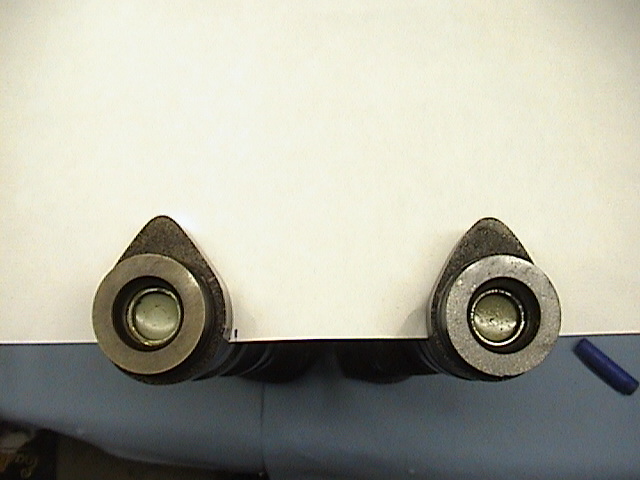
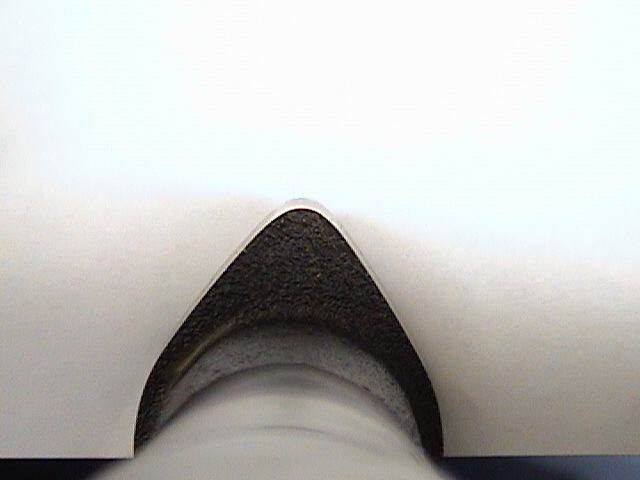
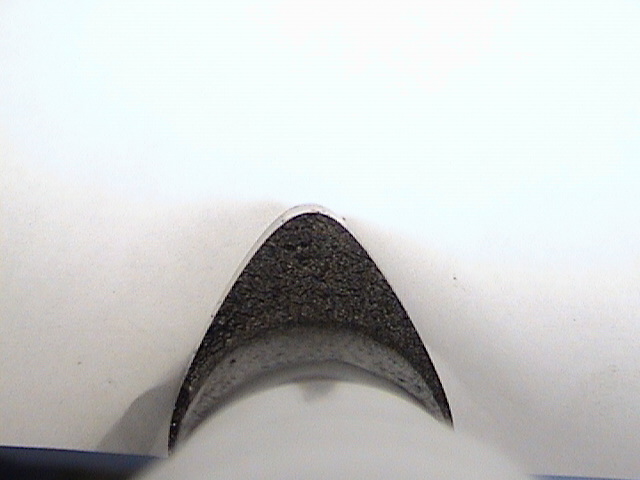
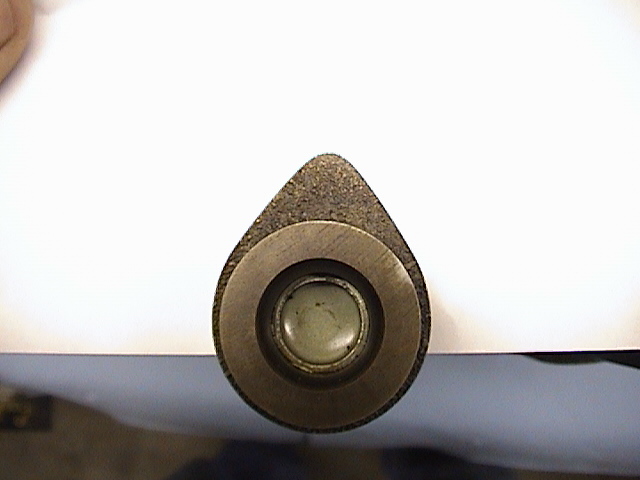
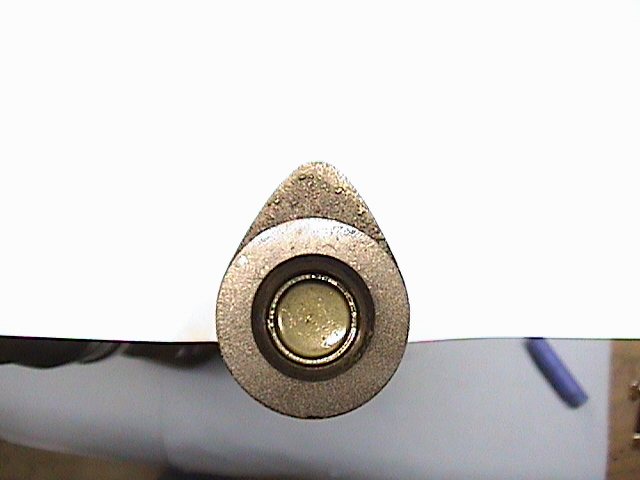
Pictures –
note how pointy the stock lobe tip is, and how broad the Plus 40 lobe tip is,
and notice how little is left of the base circle. Though not shown, the Plus 20 intake lobes
would look near identical to the exhaust lobes shown, since both ATX intake
lobes and exhaust lobes (MTX or ATX, both are identical) are the same, and thus
our grind is the same for both.
http://www.shonutperformance.com/Stock_intake_lobe.jpg
http://www.shonutperformance.com/Plus_40_intake_lobe.jpg
http://www.shonutperformance.com/Stock_exhaust_lobe.jpg
http://www.shonutperformance.com/Plus_40_exhaust_lobe.jpg
http://www.shonutperformance.com/Exhaust_lobes_plus_40_on_right.jpg